


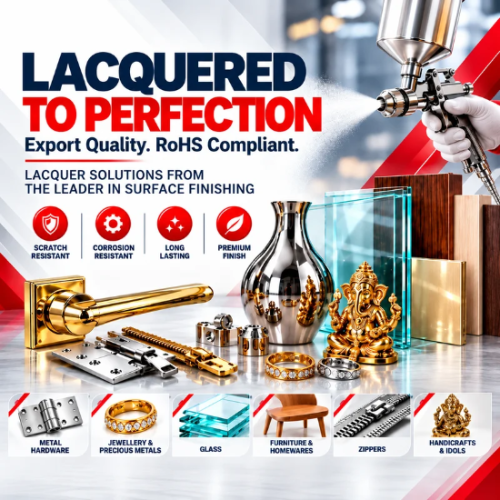
From glossy coffee tables and elegant brass idols to decorative glass panels and modern furniture fittings, lacquer coating plays an important role in enhancing the appearance and durability of everyday products. Today, lacquer finishes are widely used in home décor, furniture manufacturing, handicrafts, architectural hardware and interior design.
Whether applied as a transparent protective coating or a coloured decorative finish, lacquer helps manufacturers create visually appealing surfaces while offering protection against environmental exposure.
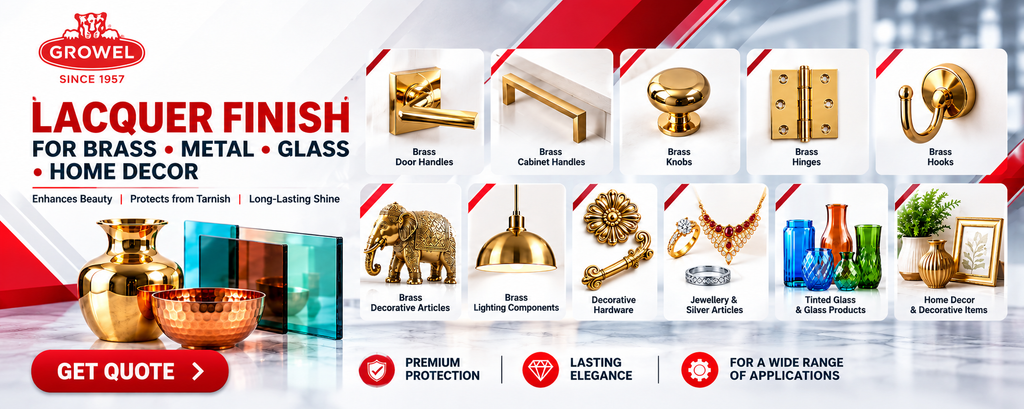
What Is Lacquer Coating?
Lacquer coating is a protective and decorative surface finish applied to materials such as metal, glass, wood and compatible engineered surfaces. Depending on the formulation, lacquer may be available as clear lacquer, coloured lacquer, acrylic lacquer, polyurethane (PU) lacquer, epoxy lacquer or water-based lacquer.
Traditional lacquer art uses natural materials and intricate layering techniques, while modern industrial lacquer coatings use specially formulated resins to achieve controlled gloss, adhesion, hardness and durability.
High-gloss lacquer finishes create reflective surfaces, while matte, satin and super-matte lacquer finishes offer more subtle appearances. This versatility makes lacquer suitable for traditional handicrafts and contemporary home interiors.
Applications of Lacquer Coating in Home Décor and Furniture
1. Lacquer Coating for Decorative Artifacts and Handicrafts
Decorative artifacts often require protection without compromising their original appearance.
Clear lacquer for metal artifacts is used on suitable brass, copper, aluminium and other decorative metal surfaces.
Common applications include:
- Brass idols, statues and decorative sculptures
- Metal handicrafts and ornamental figurines
- Decorative trays, bowls and vases
- Wall art, plaques and metal nameplates
- Antique-style decorative accessories
For example, a polished brass idol displayed in a living room may receive a transparent lacquer coating to help slow oxidation and preserve its golden appearance.
Similarly, a decorative metal sculpture may use a clear or coloured lacquer finish to enhance its visual depth and surface uniformity.
2. Lacquer Coating for Furniture and Home Furnishings
Furniture lacquer coating is widely associated with premium interiors, especially where smooth surfaces, rich colours and attractive finishes are desired.
Typical applications include:
- Coffee tables and side tables
- Dining tables and furniture frames
- Bedside cabinets and wardrobes
- Bookshelves and storage cabinets
- Console tables and decorative furniture panels
- Furniture trims and compatible fittings
High-gloss lacquer furniture creates a polished, reflective appearance, while matte lacquer furniture offers a softer contemporary finish.
For instance, a deep-red lacquered coffee table can become a statement piece in a modern living room. A white lacquered bedside cabinet can complement neutral bedroom interiors.
Water-based lacquer for wood and suitable furniture surfaces can also support manufacturers seeking lower-solvent coating options, depending on the formulation.
3. Lacquer Coating for Glass and Interior Panels
Glass lacquer coating is another important application in modern interiors.
Specialized PU glass coating and epoxy glass coating systems provide adhesion, clarity and decorative protection on appropriately prepared glass surfaces.
Applications include:
- Decorative glass wall panels
- Kitchen cabinet glass shutters
- Wardrobe and sliding-door panels
- Glass furniture components
- Interior partitions and feature panels
- Decorative glass displays
Back-painted or lacquered glass can create coloured, reflective surfaces that complement modern furniture and architectural interiors.
For example, a coloured glass backsplash in a modular kitchen can provide a smooth decorative finish. Similarly, lacquered glass panels used in wardrobe shutters can create a coordinated, premium appearance.
The selected coating must be compatible with the glass substrate and intended application.
4. Lacquer Coating for Brass Hardware and Furniture Fittings
Brass lacquer coating and metal clear coat lacquer are particularly useful for decorative hardware.
Common coated components include:
- Brass door handles and cabinet handles
- Furniture knobs and drawer pulls
- Decorative hinges and hooks
- Metal trims and ornamental fittings
- Lighting fixtures and lamp components
- Copper and aluminium decorative accessories
A clear lacquer for brass helps reduce direct exposure to air and moisture, slowing tarnishing and maintaining the polished finish.
For furniture manufacturers, consistent lacquer finishing also helps achieve a uniform appearance across multiple hardware components.
Key Benefits of Lacquer Coating
The advantages of lacquer coating depend on the coating chemistry, substrate and curing process.
Enhanced appearance: Clear, glossy, matte and coloured finishes improve the visual appeal of furniture, artifacts and decorative accessories.
Corrosion and tarnish resistance: Suitable protective lacquer coatings help reduce oxidation on brass, copper and other compatible metals.
Surface durability: Selected formulations improve resistance to routine handling, scratching and chemical exposure.
Gloss and colour retention: Properly applied lacquer helps maintain decorative appearance over time.
Easier maintenance: Smooth lacquered surfaces can be easier to clean when maintained according to the manufacturer’s instructions.
Manufacturing versatility: Spray lacquer, acrylic lacquer, PU lacquer and epoxy lacquer systems support different substrates and industrial requirements.
How Is Lacquer Coating Applied? Step-by-Step Process
A successful industrial lacquer coating process involves several stages.
Step 1: Surface preparation
Remove dust, grease, fingerprints, polishing compounds and surface contamination. Depending on the substrate, sanding or additional pretreatment may be required.
Step 2: Cleaning and degreasing
Metal articles and furniture fittings undergo suitable cleaning and degreasing to support coating adhesion.
Step 3: Primer or sealer application
Where required, apply a compatible primer or sealer. Some substrates and coating systems may not require this stage.
Step 4: Lacquer application
Apply the selected lacquer using spray coating, dipping, brushing or another approved application technique. Multiple thin coats may be used to achieve the desired appearance and coverage.
Step 5: Flash-off and curing
Allow the coating to dry or cure according to its technical specifications. Certain acrylic, PU and epoxy lacquer systems require controlled oven baking, while others are air-drying.
Step 6: Quality inspection
Inspect the finished surface for adhesion, gloss, colour consistency, hardness, coating coverage and visible defects.
Correct application conditions are essential for reliable lacquer coating performance.
Choosing the Right Lacquer for Decorative Applications
Different substrates require different coating systems.
Acrylic clear lacquer is suitable for specified decorative metal applications. PU and epoxy glass lacquers are designed for compatible glass surfaces, while specialized water-based lacquer systems can be used for suitable furniture materials.
Manufacturers should consider substrate compatibility, gloss requirements, corrosion resistance, scratch resistance, indoor or outdoor exposure and curing conditions before selecting a lacquer.
Conclusion
From brass artifacts and decorative sculptures to lacquered furniture, glass panels and architectural hardware, lacquer coating combines decorative appeal with practical surface protection.
As demand grows for premium furniture finishes, colourful interiors and durable decorative products, choosing the right lacquer coating chemicals becomes increasingly important for manufacturers.
The right formulation, surface preparation and application process can help create attractive, consistent and long-lasting finishes across home décor and furnishing applications.
Frequently Asked Questions FAQs
1. What is lacquer coating used for in home décor?
Lacquer coating is used on decorative artifacts, brass idols, furniture, glass panels, metal hardware, cabinet handles and other compatible home décor products to enhance appearance and provide surface protection.
2. Which lacquer coating is suitable for glass, brass and furniture?
Acrylic lacquer is commonly used for suitable brass and metal surfaces. Specialized PU and epoxy lacquer systems are available for glass, while compatible water-based lacquer systems can be used for furniture surfaces. Selection depends on the application.
3. Does lacquer coating prevent scratches, corrosion and tarnishing?
Properly selected and applied lacquer can improve resistance to scratching, corrosion and tarnishing. However, performance depends on the coating formulation, substrate preparation, curing conditions and environmental exposure.