


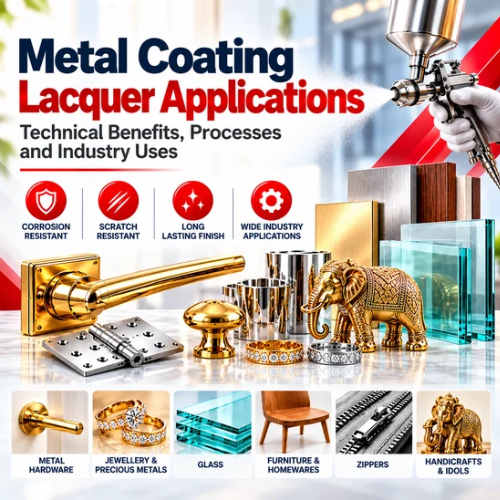
Metal coating lacquer is an important part of modern industrial surface finishing, helping manufacturers improve the appearance, surface durability and environmental resistance of metal components. It is used in applications ranging from brass door handles and aluminium profiles to automotive trim, jewellery, zippers, electrical housings and decorative hardware.
The performance of a lacquer coating depends on several technical factors, including resin chemistry, substrate preparation, film thickness, application method and curing conditions. When these parameters are correctly matched to the component and its operating environment, metal lacquer can help reduce tarnishing, improve surface consistency and preserve the intended finish.
What Is Metal Coating Lacquer?
Metal coating lacquer is a liquid coating based on synthetic resins, additives and, depending on the formulation, solvents or water. After application, the coating dries or cures to form a thin film over the prepared substrate.
Unlike electroplating, which deposits a metal layer through an electrochemical process, lacquer coating generally creates an organic protective film over the existing surface. Clear lacquer preserves the underlying metal appearance, while coloured and tinted formulations provide decorative finishes.
Common coating technologies include:
- Acrylic lacquer: Used where clarity, appearance and a balance of hardness and drying performance are required.
- Polyurethane (PU) lacquer: Selected for applications requiring particular combinations of hardness, abrasion resistance and weathering performance.
- Epoxy lacquer: Used in selected applications where adhesion and chemical resistance are important.
- Electrophoretic lacquer: Applied through an electrically assisted deposition process, particularly for compatible small metal components and decorative articles.
These technologies are not interchangeable. The correct coating must be selected according to the metal substrate, required finish, exposure conditions and manufacturing process.
Key Benefits of Metal Lacquer Coating
1. Corrosion and oxidation protection
A suitable lacquer film creates a barrier that reduces direct contact between the metal surface and environmental agents such as moisture and air. This can help limit corrosion or oxidation under appropriate service conditions. Performance depends on the coating system, film integrity, pretreatment and exposure severity.
2. Anti-tarnish protection for decorative metals
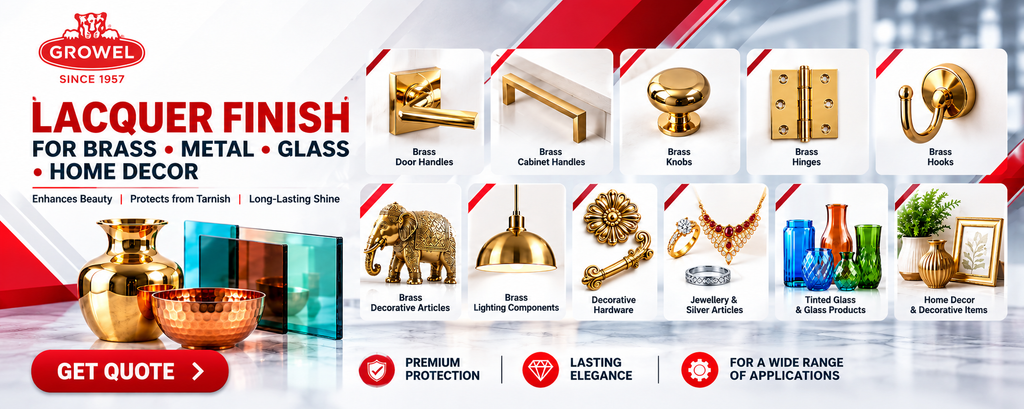
Brass, copper and selected plated surfaces can change appearance through tarnishing or environmental exposure. Clear metal lacquer helps preserve the original finish by reducing direct contact with the surrounding environment.
3. Improved hardness and surface resistance
Depending on resin chemistry and curing, industrial lacquer can improve resistance to everyday handling, scratching and abrasion. These properties are important for components such as handles, cabinet fittings and decorative accessories that experience frequent contact.
4. Gloss and finish control
Metal lacquer is available in high-gloss, satin, matte and other specified finishes. Gloss measurement at 60 degrees is commonly used to quantify surface appearance. For manufacturers, controlling gloss and film uniformity helps maintain consistency between production batches.
5. Lower maintenance requirements
By helping protect the surface from tarnishing and environmental contamination, suitable lacquer coatings can reduce the frequency of polishing and refinishing. They do not eliminate maintenance or guarantee protection under every operating condition.
Industrial Applications of Metal Lacquer
1. Metal hardware and architectural fittings
Door handles, cabinet knobs, hinges, locks, furniture fittings, hooks, nameplates and decorative trims are common applications for metal lacquer.
Practical example: A manufacturer producing polished brass cabinet handles can apply a compatible clear lacquer after polishing and cleaning. The transparent film helps retain the brass appearance and reduces direct environmental contact.
2. Automotive and electric vehicle components
Selected automotive and EV components use decorative or protective coatings to maintain their finish and resist handling-related wear. Potential lacquer applications include interior trim, decorative metal inserts, badges, selected bezels and compatible small fittings.
For example, a manufacturer of decorative interior trim may use a clear lacquer over a finished metal surface to maintain gloss and improve resistance to routine handling. Components exposed to heat, chemicals, UV radiation or severe outdoor conditions require coating systems specifically qualified for those conditions.
3. Electrical and electronics manufacturing
Metal housings, appliance panels, control enclosures, decorative bezels and selected electronic components may require a controlled finish alongside surface protection.
A lacquer can help maintain appearance and provide an additional barrier against environmental exposure. However, electrical insulation, grounding, heat dissipation and electromagnetic compatibility requirements must be evaluated separately; lacquer should not be assumed suitable for every electrical contact or electronic assembly.
4. Jewellery, fashion accessories and handicrafts
Decorative metal articles, imitation jewellery, plated accessories, brass idols, trays, plaques and handicrafts often require a consistent colour and glossy finish.
Practical example: A manufacturer of gold-coloured fashion accessories may apply a compatible transparent or tinted electrophoretic lacquer over a suitable plated surface. The coating can help improve appearance retention and resistance to perspiration, depending on the formulation and test results.
5. Aluminium and HVAC-R applications
Lacquered aluminium is used in selected architectural materials, decorative profiles, foils and technical products. Specialised functional coatings are also developed for particular HVAC-R applications, where surface wettability and condensation behaviour may matter.
For example, aluminium foil used in packaging may receive a lacquer layer to provide specified surface properties or compatibility with the intended packaging system. Continuous reel-to-reel coating processes control coating application, drying and web handling to achieve consistent results.
Hydrophilic, hydrophobic and oleophobic performance requires specifically formulated coatings; it is not a universal property of standard metal lacquer.
6. Zippers, bags and footwear accessories
Specialised coatings are used on compatible zipper components and decorative hardware for bags, garments and footwear. The coating must withstand handling while maintaining the required appearance and component function.
A zipper manufacturer may use a specialised lacquer to achieve a consistent finish on metal teeth or other compatible parts. Adhesion, flexibility, abrasion resistance and any effect on zipper operation should be checked during product qualification.
7. Industrial machinery and equipment
Selected machine covers, instrument panels, metal enclosures and decorative equipment components may use lacquer where appearance and moderate surface protection are required.
For heavily exposed machinery, structural steel, marine environments or severe chemical service, a more comprehensive industrial coating system may be necessary. Lacquer is not automatically a replacement for engineered corrosion-protection systems such as zinc-based coatings or multi-layer protective paint systems.
The Metal Lacquer Coating Process
A controlled application process is essential for achieving adhesion, consistent gloss and reliable coating performance.
Step 1: Substrate inspection and preparation
Identify the metal type and examine the surface for rust, oxide layers, scratches, polishing residues and other defects. The required preparation method depends on the substrate and existing finish.
Step 2: Cleaning and degreasing
Remove oil, grease, dust, fingerprints and contaminants using a cleaner compatible with the metal and subsequent coating. Inadequate cleaning can cause poor wetting, adhesion failure, craters and uneven coating appearance.
Step 3: Pretreatment or primer application
Some substrates require a conversion treatment, suitable primer or other pretreatment to improve adhesion and corrosion performance. The process should be compatible with both the metal and the selected lacquer.
Step 4: Lacquer application
Spraying is suitable for many complex-shaped components, decorative fittings and small parts. Dipping or electrophoretic deposition may be suitable for compatible components and production volumes. Aluminium foil and coil materials may use gravure, reverse-gravure or roll-coating processes.
Application parameters should be controlled to prevent excessive film build, runs, dry spray, pinholes and uneven coverage.
Step 5: Flash-off, drying and curing
Depending on the formulation, the coating may air-dry, undergo solvent or water flash-off, or require thermal baking. Two-component systems may also require controlled mixing and pot-life management.
For example, certain industrial acrylic lacquer specifications use a baking schedule of 130°C for 30 minutes, while other formulations require different conditions. This is an illustrative product-specific schedule, not a universal curing requirement. Always follow the applicable technical data sheet.
Step 6: Quality control and inspection
Finished components may be evaluated for:
- Dry-film thickness and coating uniformity
- Gloss at 60 degrees and colour consistency
- Adhesion to the substrate
- Hardness and abrasion resistance
- Resistance to relevant chemicals or perspiration
- Corrosion resistance using an appropriate test method
- Visual defects, including runs, pinholes, craters and blistering
Test methods and acceptance criteria should reflect the component’s end use and customer specifications.
How to Select the Right Industrial Metal Lacquer
Before choosing a metal lacquer coating, manufacturers should assess the substrate, expected service environment, desired appearance, production throughput and available curing equipment.
The selection process should also consider coating thickness, adhesion requirements, hardness, chemical exposure, indoor or outdoor use and applicable environmental requirements. Water-based and UV-curable systems may be appropriate for selected applications, but VOC emissions, energy consumption and environmental performance must be verified for the actual formulation and process.
Conclusion
Metal coating lacquer applications span architectural hardware, automotive trim, electronics, jewellery, handicrafts, aluminium materials, zippers and selected industrial equipment. The right lacquer system can combine decorative appearance with useful surface protection, provided the chemistry and application process are suited to the substrate and operating conditions.
For consistent industrial results, manufacturers should focus on proper surface preparation, coating compatibility, controlled application, curing and performance testing. These factors are central to achieving durable, uniform and high-quality metal finishes.
Frequently Asked Questions – FAQs
1. What is metal lacquer coating used for?
Metal lacquer coating is used to improve the appearance of metal components and help protect compatible surfaces against tarnishing, oxidation, moisture and routine handling. Applications include brass hardware, aluminium components, decorative fittings, jewellery, zippers and selected automotive or electronic parts.
2. Which lacquer is suitable for brass, aluminium and stainless steel?
The correct lacquer depends on the substrate, desired finish, environmental exposure and curing conditions. Acrylic, PU and other specialised lacquers may suit different applications. Compatibility and performance should be confirmed using the coating manufacturer’s technical data sheet and suitable testing.
3. How is industrial lacquer coating applied to metal parts?
The process typically involves surface inspection, cleaning, degreasing, optional pretreatment or priming, lacquer application, drying or curing and quality inspection. Spraying, dipping, electrophoretic deposition and roll coating are selected according to the component geometry, coating chemistry and production requirements.